

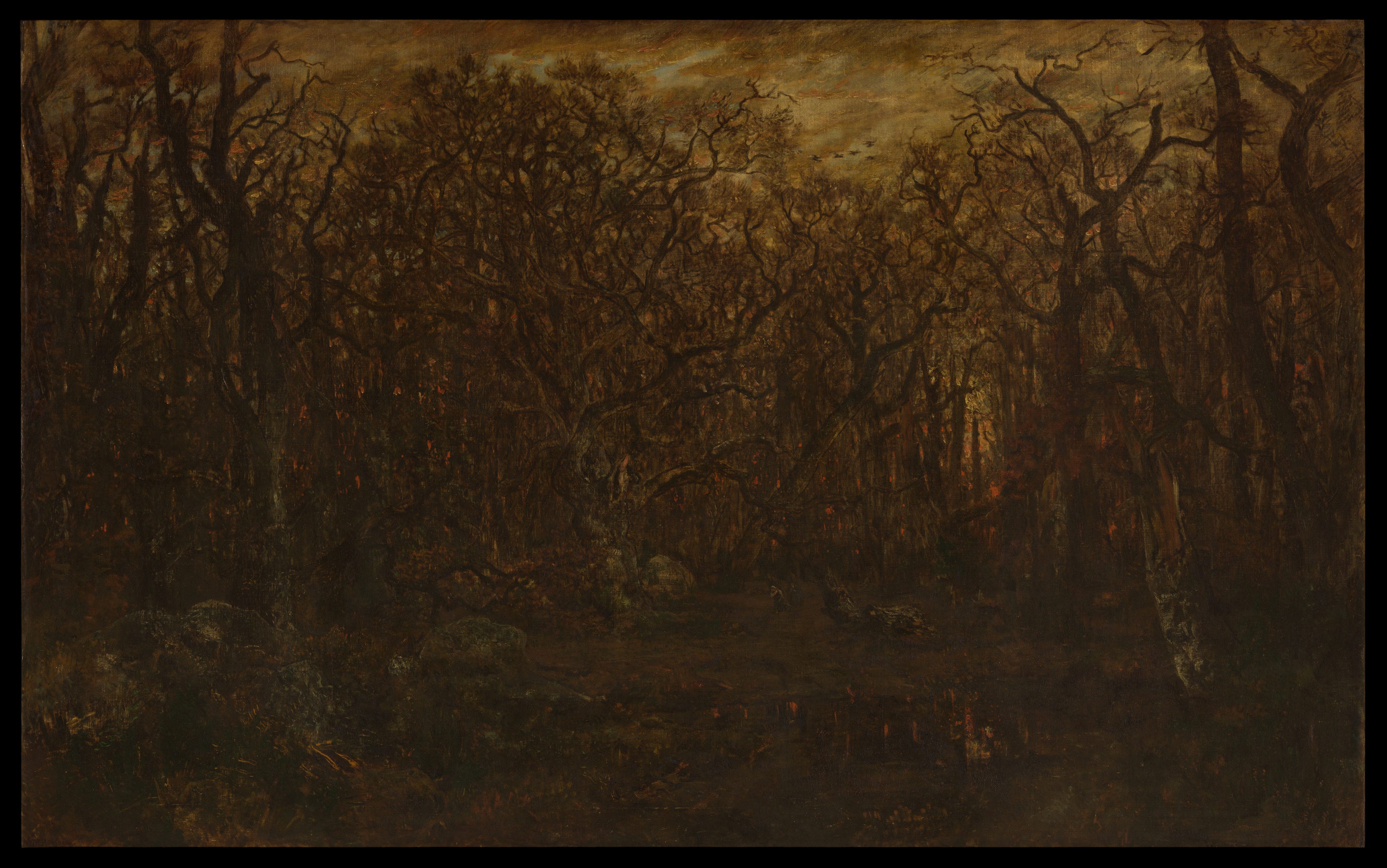
I’m not going to beat around the bush. I am finding it harder, maybe not quite by the day but close to it, to maintain what scholarly drive I have left and continue to do the kind of academic research, writing, and other work that has occupied so much of my adult life from college forward, and which I have for the most part genuinely loved. I am fortunate, to be quite frank, that the professional work I do as part of my (albeit somewhat precarious, more so today than a couple months ago) salaried academic job often involves things like manuscript transcription or cataloging, tasks that do not require the same sort of intentional sustained drive that, say, writing an article or a book chapter do. When it comes to that sort of academic writing, I find myself advancing in short bursts, but struggling to maintain that energy, struggling, if I am being very honest, to care about what I’m doing. Some of it is part of the general feeling of political and social doom that, let’s be honest, is not without cause, though it is much more pervasive in our day and age given the constant presence of news and related discourse in our daily lives, from waking to sleep. But there is something deeper at play, something that is relevant not just to political possibilities but to the ways that human life can be lived in the days and years to come. So while it may sound as if I am simply airing the grievances of yet another ivory tower (ivory rock pile would be a little more realistic in my case perhaps) occupant, I do so only in order to arrive at what I think are some deeper truths about our current moment and the challenge that everyone and everything faces, not just those of us in scholarly, academic, and educational fields and institutions.
Like anyone else in a humanistic, writing-intensive discipline, I’ve gone through periods of productivity and of more diminished output; everyone (except for the truly exceptional) is subject to such fluctuations. The last few years, starting in many ways around the time of COVID (although not precisely conterminous with that now rather distant feeling period of our history, and only partially causally related), however, have been different. The malaise, if that is the right word, has become general, pervasive, almost impossible to shake.
My malaise is not the product of one single trend or issue, nor, am I quite confident, is it unique to me, though the degree to which it grips others certainly varies (I imagine it helps to have a tenure-track job, for instance, a powerful motivator for producing books and articles and other “deliverables” in our rarefied little world). As I look around at the shape of scholarly work and life in my field and every other, it is very, very hard not to feel the bleakness settling over the entire landscape like some toxic, impenetrable cloud. If it were merely a matter of our chaotic political moment here in the United States it would be one thing—sure, seeing entities that have become so foundational to scholarly livelihoods like the National Endowment for the Humanities be gutted overnight is hardly reassuring, but we can at least entertain the idea that a future administration will restore everything that has been burned down. Whether that is realistic at all or not (and it probably is not, but that’s another sytory) is one thing, at least there is an imaginable solution. If we’re being creative maybe we could come up with some other potential future ways of eking out funding streams, and maybe be better for it—I’d like to take my teaching and scholarship “into the streets,” and already do that to a small extent, maybe it could even provide some financial remuneration, who knows. Long before the present crisis, there have been good reasons not to trust the existing system, to put it mildly, and there are alternatives, with more in the realm of the imaginable. No, it is not simply institutional breakdown and political assaults that becloud my vision.
What is worse are the headwinds against which it is almost impossible, perhaps it is presently impossible, to even imagine solutions or alternate ways things might turn out. And what is truly troubling is that these dynamics apply across the board, including if, say, you are working to build robust radical political, economic, and social alternatives opposite the capitalist project we currently inhabit. There is no doubt in my mind that humans globally, and in my own country in particular, are undergoing a probably unprecedented decline in the skills and abilities and practices necessary for the survival of humanistic scholarship, and really anything to do with literacy and numeracy. (Which is a great many things in our modern industrialized world!) Our collective and individual ability just to read in a sustained manner, much less in a manner that seriously retains and engages with what we read, is collapsing. You know it, and I know it, not just from the observation of others but from our own honest self-evaluation. The culprit is, if not quite entirely then almost so, modern digital technology, in particular the omnipresent smartphone and the very narrow mode of digital engagement that its set of affordances encourages (“dictates” might be an even better word for it). Many others have been writing about this dynamic, so I’ll keep it brief here. In short, the technological sphere that we inhabit, which really inhabits us, has greatly reduced our ability to pay attention and to process complexity, to think in deep and sustained ways, and to maintain robust intellectual communities through time and space. Whether such a development was a necessary one, built into the trajectory of digital environments, is another question—what matters for now is that it is the trajectory that unfolded, and no one really has any idea what a non-catastrophic exit might look like. While it is certainly true that, akin to climate change, this literacy and attention apocalypse is the historical product of specific capitalist systems of economy, technology, and so forth, I am not sure that, say, a socialist revolution to replace the capitalist order would solve the problem, unless it also just collapsed digital technology.
Hot on the heels of the evisceration of human attention and substantive literacy, ironically, it has never been easier for massive reams of text (as well as visual material, sound curiously seems less prone at the moment to these things) to be churned out and launched into cultural orbit. In fact it is safe to say that the shape that generative AI, and the direction of machine learning applications in general, has taken is almost entirely being determined by already existing conditions. By that, I mean that students didn’t stop reading entire books because ChatGPT could summarize them for them or spin out a passable essay: ChatGPT provided a solution for a condition that already existed. (And we could explore the contingency of the culprit technologies and why they similarly came into prominence, the conditions of industrial capitalism create the conditions for which new technologies, products, and so forth find a particular purpose and usually end up reinforcing the existing condition). But if this new suite of technology did not light the fire, it has certainly doused the flames with a steady stream of gasoline. Again, not to belabor the point that has been made well elsewhere by others, but all signs point to a veritable epistemic apocalypse in terms of reading, writing, and serious engagement—without any workable solution on the horizon, or even any remotely realistic imaginable solution in sight. We cannot make people sit in a room without a smartphone or computer and read an academic monograph start to finish, and even if we could, it wouldn’t have much effect. The die is already cast, my children’s generation is already, by and large, being formed in this technological world.
As a historian and a scholar in a discipline with a long and venerable tradition of scholarly life and work, I have always operated under a couple of foundational assumptions. One, that my work is not merely an enjoyable hobby. By which, I mean that when I learn something, when I work through a difficult problem or tangle up with theories and philosophical positions vis-a-vis the human past, in some way that labor on my part will translate outwards to others, that it will have real, meaningful benefit for people beyond myself. Not only did I believe—and I still do!—that the work of history is meaningful for currently living humans, that it can and should inform how we live, think, pray, love, that it can shape in a positive manner our relationships with one another, the natural world, and even with God, but I also believed that my formation in that discipline and productivity therein could and would translate out to others, through my writing, teaching, public presence, and so forth. To be sure, I also hoped to make some sort of living doing this work, and for a while, that at least has transpired, though it is increasingly in doubt (and my original objective of some form of the professorial life has long since ceased to be viable). While I do not think there is a direct translation of my scholarly work, or that of most people, into meeting political ends, I do very much believe that good scholarly work, in whatever field, is vital to crafting a better political and social order, in a diversity of ways that would take us far beyond the confines of this essay.
Two, I have always understood myself to be part of a much larger tradition and process of scholarly work, of knowledge production, reflection, and pedagogy, one that in some stretches back not hundreds but thousands of years. I still remember when I first read, some decade and a half ago now, the great twentieth century medievalist and theologian Jean Leclercq’s beautiful book The Love of Learning and the Desire for God and sensing a very real connection with those medieval monastic scholars and their practices, chronologically distant but not really foreign, meaningfully continuous with what I was doing in reading that very book under the tutelage of a senior scholar and in company with other learners. Beyond the somewhat intangible satisfaction of being part of a bigger process, of having a genealogical, emotional, and indeed spiritual connection with those who have gone before you, being part of such a scholarly tradition is also an assurance that your own work will have some enduring meaning, as part of a much larger collective work that began long before your birth and will—one hopes!—continue long after your biological death. I would be very surprised if a century from now, anyone except perhaps one or two historians of very specialized bent so much as know my name; the odds that anything I have ever written will still be in circulation then are next to zero. But what I have generally banked on and what has continued to motivate me is the implicit understanding that my little interventions would be part of a much larger continuity, contributing to this dynamic edifice of knowledge we are building and which others will take up in the future.
Both of these foundational propositions are now very much in doubt, for the reasons outlined above, and for others, some of a longer standing nature. It is not that good scholarship is not still being produced, I’ve many brilliant and hard-working (much more brilliant and hard-working than me) colleagues who continue to write and publish and engage the wider public, who teach and blog and research. But even for the most brilliant and productive, the ambit of effect is shrinking. And it is hard to shake the feeling that our overall range has narrowed, that our intellectual and theoretical approaches have become all but exhausted, that we have nothing with which to push forward in this new world. What we find instead is the sense that everything is played out, everyone is tired, the curtain is starting to fall, and the audience went home a whole act ago. I suspect that at least part of the—let’s be very honest—malaise and marginalization of radical left politics in this country and elsewhere is a product of this general trend, given that, for better or worse, much theorizing and praxis are downstream of academia.
I wish I had a resounding hopeful note to end on, some grand proposed solution forward. I don’t, not really. I cannot steer my way out of the sense that scholarly life as we have known it for my lifetime, for, perhaps, the last millennia or more, will end this century, at least as an important and visible aspect of human life, lingering on, perhaps, in literal monasteries or other obscure corners of the world. In the list of ongoing, seemingly inescapable dynamics and trajectories that make up this stage of modernity or capitalism or whatever you want to call it, the woes of scholars and academia are fairly minor, sure. And don’t get me wrong, I have an incredibly good life by all metrics, and I still enjoy most of my work, even if I have to increasingly accept it as basically a hobby, on par with my enthusiasm for building scale models or collecting fossils.
Still, if my sense of things is correct (and, good Lord willing, I will be proven wrong), we as humans stand to lose a great deal that has been good and beneficial - things that could have contributed to tackling the other systemic and pervasive crises of the greater moment. Therein lies the true bleakness of the moment. Not that things are generally speaking especially bad by most metrics, compared to say much of the twentieth century, we’re doing quite well, living comfortably, mass crimes and horrors going on to be sure but simply not at scales from within living memory (that could change, of course). Rather it is the sense of terminality, of the very products of our comfort and ease effecting a finality that the terrors and destruction of world wars and totalitarian states could not realize. It is not a feeling of a violent storm roaring through but of an approaching night without clear promise of dawn.
Where I do see possibility as yet—and can perhaps indeed end on a hopeful note—is paradoxically perhaps in spaces and practices that effectively reach back towards the pre-literate world, that step outside of the technological prison that contemporary capitalism has generated for us all. Besides academic work, I have over the last couple of years now thrown myself into what can best be described as agroecological community organizing work, which I’m sure I’ll describe at more length in these pages in the future. The work that I’ve helped set in motion these last couple of years has been an order of magnitude more successful than I had anticipated, and much of it is due to the same set of factors described above, pushing people, I think, into the real world, into deliberate encounters with other people and with other living things, with the solid earth itself. Orality, the real orality of speaking to people and not listening to a person on a screen, is the order of the day out in the literal field, the soil on our fingers just physically preventing a lot of screen swiping. Working on landscape transformation, food production, and so forth, in company with other people, in common spaces (spaces that we are working to make into commons, in fact), all become temporary acts of refuge, time and space outside of the hegemony of digital capitalism and all the rest. One of my next goals is to expand our pedagogical and intellectual offerings and interventions, to sync them up with work on the land and in the community, to take scholarship and its best aspects not just out into the streets but into the garden, the farm, the forest.
I’m not suggesting that I’ve hit on the or even a solution—I’m under no illusions about political-economy, the cumulative effects of technology, and so forth, as surely is clear by now to the reader who has made it this far! But I do want to think that we can start to find imaginable solutions when we carve out spaces, times, and relationships that are less besieged, less affected by the apocalypse of literacy, attention and human connection. Much as sporadic efforts at starting cooperatives or practicing direct democracy or any other practices—all well and good in themselves—have not and will not bring down the capitalist system or undermine state power in and of themselves, building and sustaining sites of resistance, of refugium, won’t of themselves address those underlying dynamics. But what they can do is provide opportunities for discovery, imagination, prefiguration, the nodes of resistance, and rebuilding that can, in time, expand into something more. And, perhaps, realize a future that is much less bleak than the one that currently sits upon our collective horizons.
Disclaimer:
The views expressed in articles and submissions to Solidarity Tribune are those of the individual contributors and do not necessarily reflect the positions of the collective as a whole. We publish diverse perspectives rooted in solidarity, liberation, and mutual aid, but we recognize and respect a range of voices within our broader movement.
Content Warning:
Some articles may discuss topics like state violence, systemic oppression, or personal trauma. Reader discretion is advised.
Yes!!! When people start scaremongering about loss of literacy, I think about all the students I've known with learning disabilities, for whom that "read a whole book" thing was never going to be possible. And then, as a social anthropologist, I think about societies who've lived and thrived without literacy. *"Where I do see possibility as yet—and can perhaps indeed end on a hopeful note—is paradoxically perhaps in spaces and practices that effectively reach back towards the pre-literate world, that step outside"*. Back in the 1970s, Soc Anth was trying to show contemporary USA that unschooled foragers lived a better life, beyond capitalism and the endless want. Maybe we're about to find out.
Good morning, Jonathan. It's safe to say many of us feel pressed down by the weight of fascism hanging over us. This certainly didn't begin with the sitting president, as each one prior added to the dictator's toolkit that he inherited. This happens when we ignore the warning signs long enough (because our party has power) and become complacent in accepting the "powerful" at face value without question.
Sure, there are reasons one could be let down. I won't practice listing them here, as someone with your aptitude easily sees this. Yet, Solidarity Tribune sees what collective strength and resilience becomes possible when we double down on building working class solidarity in our communities rather than succumb to the onslaught imposed by Narcissus and his Nazi ilk. I see your willingness to contribute here as a testament to your commitment to fellow workers.
Well done on your contributions to academia. That's quite the accomplishment, and just completing a program is quite the challenge these days. Many upper-graduate participants leave with mental health concerns. The sheer volume of information to learn grows exponentially, and the pressures of university prove insurmountable to many based on coursework alone. So kudos.
With that being said, I see your frustration with the perceived lack of compensation. We know capitalism profits through exploiting our labor and withholding the full value of our work. Capitalism, by nature, displays a reduced profit-making capacity over time. Part of why industry consolidates competitors and suppresses wages is because of this tendency to see falling profits.
It may improve your well-being to let go of that expectation. In fact, many of us survive on $30k or much less per year. I err on the side of reducing my costs to zero, like with the community food gardens and forests that we both grow. The earth is abundant; the artificial scarcity they impose upon us cheapens this.
Trust me, I feel it, too. But sometimes, we have to let go of the old to make way for the new. Many of the bourgeois institutions do not serve you or me, but they serve to perpetuate the system of poverty, patriarchy, racism, and white supremacy that we fight against. It may feel like a loss now, but we must consider what is worth saving. If it's all on the chopping block, then we may have to prioritize.
I choose to view this as catharsis for you. Like you needed to express difficult feelings and to be acknowledged for having them. I see you; we're together on these feelings. I hope you don't stay in the doldrums, though, because we need you with us to be present in the possibilities of working class solidarity. Trust me, I feel it. My stress has become quite symptomatic lately, but you will see me drop dead before you see me quit.
Thanks, Jonathan. I'm really glad to have you here with us. You do so much good in your community, and you're very insightful. May being here with us bring you some hope that we have great strength and resilience together. May you work through this sadness so you can become embodied and self-actualized once more.